Quantum Simulation
Hello and we welcome you back with an exciting topic! Read more to know what's it about!
Are you one of those who's diving deep into quantum research? or the one who's trying to catch up with the new technology? or the one who doesn't know the Q of "Quantum Computing"! Let's learn it together!

So, for those of you who don't know .. Quantum Computing is a computational technique that uses physics principles (especially quantum mechanics) to accelerate the process. It mainly uses superposition and entanglement.

Well, superposition is a combination of two or more states, particularly quantum states of qubits in quantum computing.
Then what about entanglement? It is basically a connection with which the state of a qubit can be determined when the state of the entangled qubit is known.

Using these basic principles and many more quantum computing can be categorized into the most powerful next gen!
To know more.. Scroll down!
Can you afford a quantum computer?
Let's just say, if you are a billionaire then you can, but what if you're not? Don't loose hope! For people like us they've invented simulators.
So it's basically like any other simulation, but what exactly is it?
Quantum simulator:
A quantum simulator helps us in working with quantum systems that are practically impossible to work
on super computers and very difficult to study in a laboratory. They are designed to work on specific problems.
The most widely used quantum simulator is a quantum computer proposed by Richard Feynman and Yuri Manin in 1980. They also proved that quantum simulator would never show an exponential slow down like a classical one.
In these past years, the quantum simulation field has show an tremendous development. This is mostly due to the experimental advancements, giving rise to more opportunities and platforms in which large arrays of single quantum systems such as atoms can be experimentally examined.
Currently we have trapped-ion simulator, ultracold simulator and super-conducting qubits. Let's dive deep into the simulation techniques.
Trapped-Ion Simulator:
 '
'The trapped-ion simulator is made with a single-plane crystal that has hundreds of beryllium ions inside a device called penning trap. The outer-most electrons act as the magnet(quantum magnet) and hence it can be used as qubit. Scientists toiled to cool the ions to absolute zero. When the laser pulses are timed carefully then they had a scope to study the quantum behavior which would be impossible to study in a laboratory.
Super-conducting qubits:
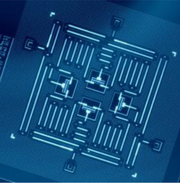
They are mainly categorized into 2 types, the first one being quantum annealers which can be used for determining the states of a certain Hamiltons after a adiabatic ramp and hence it is sometimes called as adiabatic quantum computing. The second one includes studying the specific hamiltons based on their ground state properties, time dynamics of quantum phase estimations.
The main reason to discuss this topic today is to let you know that there's a whole new world with the next gen tech waiting for you!

Do catch up! And for more interesting content follow us!
And to know more abut quantum computing make sure to refer- https://www.amazon.in/Beyond-Classical-course-Quantum-Computing-ebook/dp/B08412Q64W


Comments
Post a Comment